
How Long Do Fresh Eggs Really Last?
From the Field • Backyard Basics
How Long Do Fresh Eggs Really Last?
The backyard keeper’s guide to collecting, storing, and knowing when to toss.
Introduction
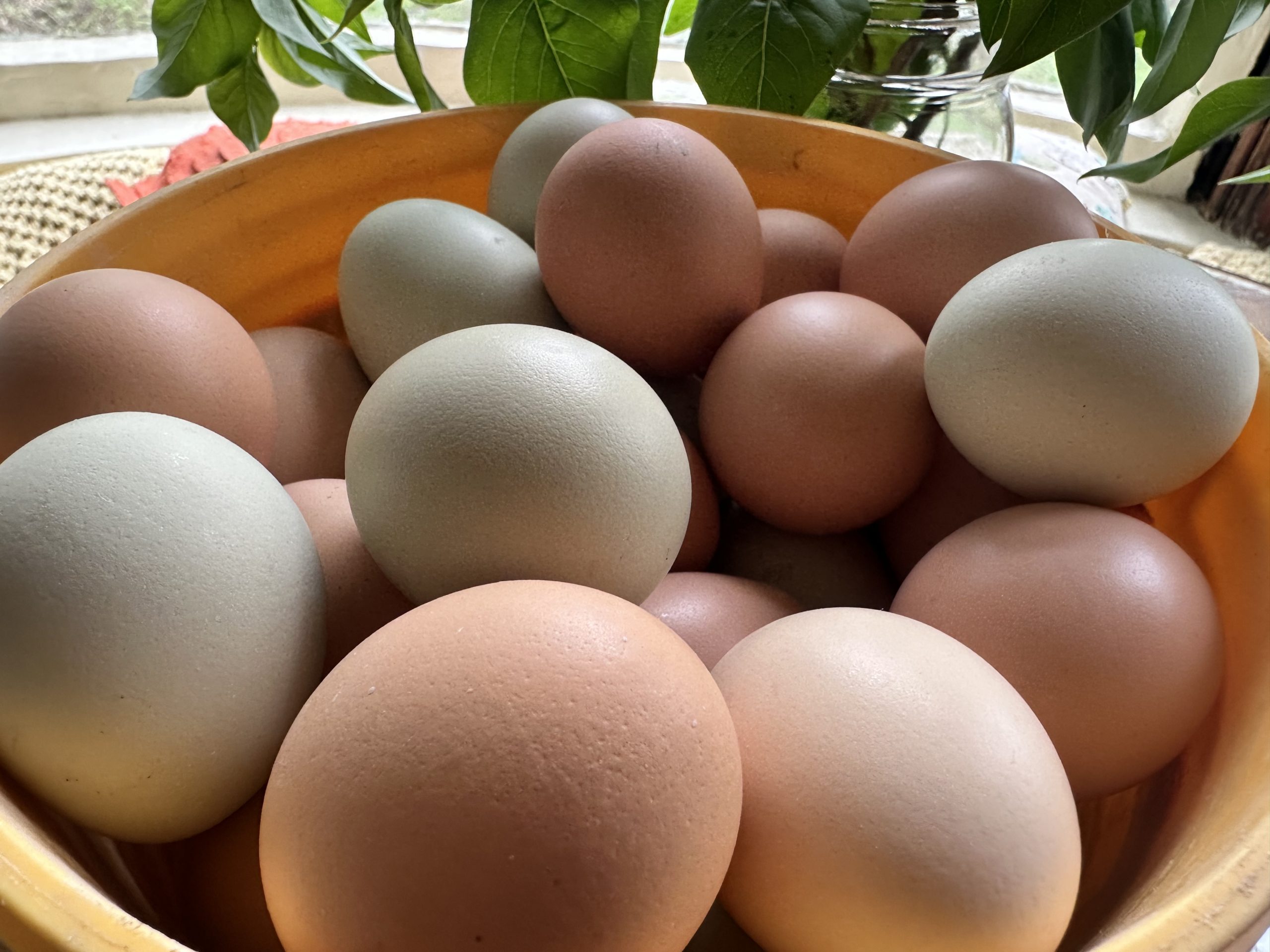
You walk out to the coop in the morning, lift the nesting box lid, and there they are—warm, smooth, and absolutely perfect. Fresh eggs from your own backyard. It never gets old. But sooner or later, every new chicken keeper asks the same question: how long are these good for?
The answer depends on one surprisingly important detail—whether or not you wash them.
The Magic of the Bloom
When a hen lays an egg, she coats it with a thin, invisible layer called the bloom (also known as the cuticle). This natural coating seals the thousands of tiny pores on the eggshell and acts as a barrier against bacteria and moisture loss. Think of it as nature’s own shrink wrap.
As long as the bloom stays intact, the egg is remarkably well protected. This is why farm-fresh eggs don’t need to go straight into the fridge—and why eggs in many countries around the world are stored right on the kitchen counter without a second thought.
Unwashed Eggs on the Counter
If your eggs come out of the nesting box relatively clean and you leave them unwashed, you can safely store them at room temperature for about two to three weeks. Some experienced keepers push that closer to a month, especially in cooler weather, but two to three weeks is a reliable window.
A few tips for countertop storage: keep them out of direct sunlight, store them in a cool spot (ideally below 75°F), and use the oldest ones first. A simple trick is to write the date on each egg with a pencil when you collect it—no guessing, no confusion.
Washed Eggs in the Fridge
Once you wash an egg, you strip away the bloom. Without that protective coating, the shell becomes porous and vulnerable. Washed eggs must go into the refrigerator—no exceptions.
The good news is that refrigerated eggs last a long time. You can expect washed eggs to stay fresh for four to five weeks in the fridge, sometimes even longer. Store-bought eggs, which are always washed and sanitized before packaging, typically carry a sell-by date about 30 days out, but they’re often still perfectly good for a couple of weeks beyond that.
Keep them in the main body of the fridge, not the door. The door temperature fluctuates every time you open it, and eggs prefer a steady, cool environment.
How to Tell If an Egg Has Gone Bad
Even with the best storage, eventually an egg will go past its prime. Here are a few reliable ways to check.
The float test. Fill a bowl with water and gently place the egg in it. A fresh egg sinks to the bottom and lies flat on its side. An egg that’s a week or two old will sink but tilt upward slightly. If it floats to the top, it’s time to let it go. As eggs age, moisture escapes through the shell and is replaced by air, making the egg more buoyant.
The sniff test. This one’s old-fashioned but foolproof. Crack the egg into a bowl. A fresh egg has almost no smell. A bad egg—you’ll know immediately. The sulfur smell is unmistakable and impossible to ignore.
The look test. A fresh egg has a bright orange or deep yellow yolk that stands up tall, with thick, firm whites that hold their shape. As eggs age, the whites get thinner and runnier, and the yolk flattens out. If anything looks discolored, cloudy, or off, trust your instincts.
A Quick Reference
Here’s the short version for your fridge door:
- Unwashed, counter: 2–3 weeks at room temperature
- Unwashed, fridge: 3+ months (the bloom plus cold gives you the longest shelf life)
- Washed, fridge: 4–5 weeks
- Cooked (hard-boiled), fridge: about 1 week
One combination to know: if you leave your eggs unwashed and then put them in the fridge, they can last three months or even longer. You get the best of both worlds—the bloom’s protection plus the cold’s preservation.
What About Dirty Eggs?
Sometimes an egg comes out of the nesting box with mud, feathers, or—let’s be honest—chicken poop on it. It happens. If it’s minor, you can dry-brush it off with a rough cloth or fine sandpaper and keep the bloom intact. If it’s really messy, go ahead and wash it with warm water (always warmer than the egg, never cold), dry it off, and pop it in the fridge.
The key is to never let a dirty egg sit in water or use cold water. Cold water can cause the shell to contract and pull bacteria inward through the pores—the opposite of what you want.
Closing Thoughts
One of the quiet joys of keeping backyard chickens is that moment of reaching into the nesting box and pulling out something warm and alive with possibility. Knowing how to store those eggs properly means nothing goes to waste—and your family gets to enjoy the freshest, most flavorful eggs you’ll ever taste, for weeks on end.
From our flock to yours—the Happy Chicks Foundation.


